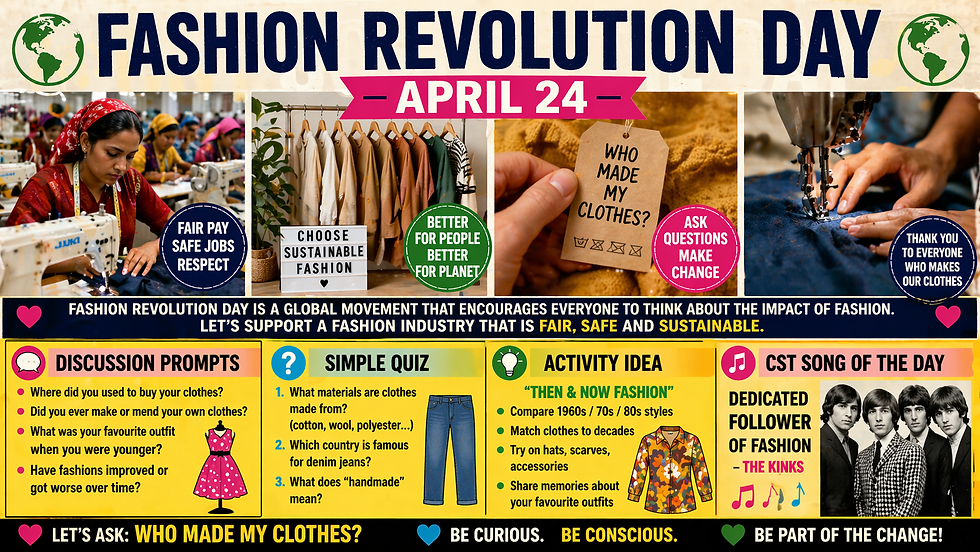
'Fashion Revolution Day', April 24


Fashion Revolution Day (April 24) is a global awareness day that encourages people to think more carefully about where their clothes come from, who made them, and the impact fashion has on people and the planet. It was created in response to the Rana Plaza disaster, when a factory building in Bangladesh collapsed in 2013, highlighting unsafe working conditions in the fashion industry.
The day promotes the message “Who made my clothes?” - inviting us to value the people behind what we wear, support fair wages and safe conditions, and choose more sustainable, ethical fashion. It’s not about stopping fashion, but about making better, more informed choices - repairing, reusing, recycling, and buying thoughtfully.
For a CST-friendly session, Fashion Revolution Day works brilliantly as a theme:
It taps into long-term memories of clothing styles through the decades
Encourages discussion and reminiscence (favourite outfits, trends, special occasions)
Links nicely to music and culture (songs about fashion, identity, and style)
Opens up simple, meaningful conversations about change over time
It’s a positive, engaging way to explore both personal identity and wider social awareness—all through something everyone relates to: the clothes we wear 👗

CST Song Of The Day – Dedicated Follower of Fashion (1966) by The Kinks
This witty and instantly recognisable song is a great choice for a Fashion Revolution Day - themed CST session. With its catchy melody and playful lyrics, Dedicated Follower of Fashion gently pokes fun at ever-changing trends and the idea of always needing the “latest thing” - making it both entertaining and thought-provoking.
For people living with dementia, the song often taps into long-term memories of clothing and style, especially from the 1960s. It can spark conversations about:
Favourite outfits from younger years
Memorable fashion trends (mini skirts, flared trousers, hats, etc.)
Shopping habits and “dressing up” for special occasions
The humour in the song also helps create a light, relaxed atmosphere, encouraging laughter and engagement. It’s ideal for singalongs, toe-tapping, and gentle movement, helping to boost mood and social interaction.
As part of a CST session, it provides a natural springboard into activities such as:
Naming items of clothing or accessories
Matching fashion styles to decades
Sharing personal stories linked to clothes and identity
Overall, it’s a fun and meaningful way to combine music, memory, and conversation - all centred around a theme everyone can relate to: fashion 👒

The 1960s was a bold and exciting decade for fashion, full of colour, creativity, and change. Styles became more youthful and expressive, reflecting a time of cultural revolution, music, and new freedoms.
Early in the decade, the “Mod” look was hugely popular - especially in Britain. This included:
Mini skirts and shift dresses
Bright colours and bold geometric patterns
Go-go boots and statement accessories
Icons like Twiggy helped define this sharp, modern style, which felt fresh and different from anything that came before.
For men, fashion became slimmer and smarter, with:
Tailored suits and narrow ties
Chelsea boots
Influences from bands like The Beatles, who helped shape the look of the decade
As the 1960s went on, fashion became more relaxed and expressive with the rise of hippie culture:
Flared trousers and flowing fabrics
Tie-dye patterns and embroidered details
Natural, bohemian styles

The 1970s took fashion to a whole new level - bigger, brighter, and more expressive than ever before. It was a decade of individuality, where people mixed styles and weren’t afraid to stand out.
One of the most recognisable looks was the flared trousers and platform shoes trend:
Wide-bottom trousers (“bell bottoms”)
High platform heels and boots
Bold prints and bright colours
The influence of disco music brought glamour and sparkle:
Sequins, satin, and shiny fabrics
Jumpsuits and fitted shirts
Statement outfits inspired by artists like ABBA
At the same time, the hippie/bohemian style continued from the late 60s:
Maxi dresses and flowing skirts
Fringed jackets and waistcoats
Tie-dye, crochet, and natural fabrics
Men’s fashion became more adventurous too:
Wide lapels and patterned shirts
Bright suits and bold colour combinations
Longer hair and more relaxed styles

The 1980s was all about boldness, excess, and standing out. Fashion became louder, brighter, and more expressive than ever, with a real “more is more” attitude.
One of the defining looks was the power dressing style:
Sharp suits with big shoulder pads
Bright colours and bold patterns
A strong, confident image - especially for women entering the workplace
At the same time, fitness and pop culture had a huge influence:
Leg warmers, leotards, and headbands
Casual sporty looks inspired by aerobics and TV workouts
Music icons shaped fashion in a big way:
Madonna popularised lace gloves, layered jewellery, and edgy street style
Duran Duran and other pop groups influenced colourful, stylish looks
There was also a rebellious edge with punk and new wave fashion:
Leather jackets, ripped clothing, and studs
Big hairstyles—perms, spikes, and lots of hairspray!

Fashion songs are a fun and engaging way to explore how clothes, style, and identity are reflected in music. Across the decades, many well-known songs have celebrated fashion - sometimes glamorising it, sometimes gently poking fun at it, and often using it as a way to express personality and confidence.
Songs like Dedicated Follower of Fashion by The Kinks, Vogue by Madonna, and These Boots Are Made for Walkin’ by Nancy Sinatra show how fashion and music go hand in hand. They often bring back memories of particular eras, styles, and moments in people’s lives.
For a CST session, fashion songs work really well because they:
Tap into long-term musical memory and encourage singalongs
Spark conversations about clothing, trends, and personal style
Link music to identity, confidence, and self-expression
Create a fun, lively atmosphere with rhythm and movement
They can also be used as a starting point for simple activities such as:
Naming items of clothing mentioned in songs
Matching songs to different decades or fashion styles
Sharing memories of favourite outfits or occasions
Overall, fashion songs provide a brilliant mix of music, memory, and meaning—helping to bring sessions to life in a way that feels familiar, enjoyable, and inclusive 💃🎤


Comments